
CMS have gone from static page to JAMstack, and its history is at the heart of open source and the evolution of the web.

Content management system (CMS) is a prolific software category that covers all types of applications for the creation and modification of digital content. So it should come as no huge surprise that the history of the CMS traces back to the first website in history, by Tim Berners-Lee in 1990, which was modeled on an internet-based hypertext system HTML, which represented just text and links.
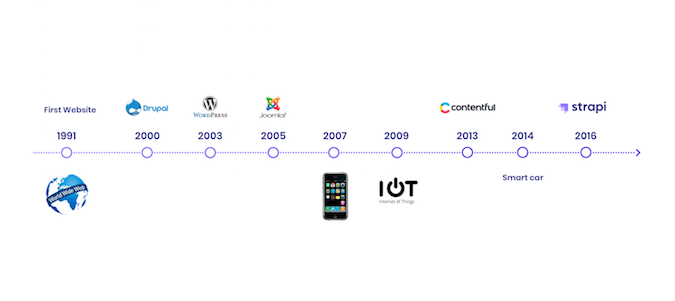
The humble beginnings of the world wide web lay in static sites that served content without the need for a back-end database. They consumed very little computing resources, so they loaded quickly—because there were no database queries, no templates to render, and no client-server requests to process. There was also little in the way of web traffic, given that few people were regular “web surfers,” especially compared to today.
And, of course, it was all open source software that facilitated this interoperability. Indeed, open source has always played an important role in the evolution of CMS.
Rise of the CMS
Fast-forward to the mid-nineties, as the popularity of the world wide web grows and websites increase the need for frequent updates—a change from its origins hosting brochure-type static content. This led to the introduction of a plethora of CMS products from FileNet, StoryBuilder from Vignette, Documentum, and many others. These were all proprietary, closed source products, which was not unusual for that time period.